
In Nepal, people can openly discuss marriage, family responsibilities and raising children, yet a conversation about sexual pleasure can still make people uncomfortable. Someone might be curious about a vibrator or another intimate product but hesitate to ask a friend, visit a shop or even search for information openly.
Why does something so natural to human life remain difficult to discuss?
The answer lies in a complex relationship between culture, family expectations, privacy and changing attitudes towards relationships. Nepal is culturally diverse, and not everyone shares the same beliefs. However, for some people, sexual topics remain private matters that are rarely discussed openly.
At the same time, the internet has made information about intimacy more accessible. Adults can now learn about sexual wellness, explore different products and make personal choices with access to a wider range of information.
This is the changing conversation around sex toys in Nepal—a story that goes beyond shopping and touches on culture, history, relationships and the way people understand intimacy in modern Nepali society.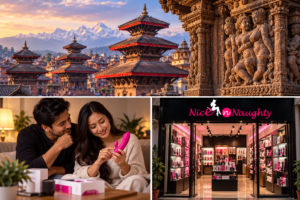
Why Is Sex Still a Taboo Subject in Nepal?
Nepal’s traditions, religious beliefs, family structures and community expectations all influence how people approach relationships and sexuality. These influences vary across communities, but conversations about sexual pleasure can be uncomfortable in some households.
For many people, education about sex has traditionally focused more on reproduction, marriage and avoiding unwanted pregnancy than on understanding pleasure, consent and personal preferences.
Research involving women in Kathmandu has documented difficulties discussing sexual health, including embarrassment and limited opportunities for open conversation. These findings do not describe every Nepali household, but they help explain why some people prefer to seek information privately.
Consider someone who wants to understand how a vibrator works. They might feel comfortable searching online but uncomfortable asking a relative or friend. A married couple may have questions about introducing a new product into their relationship but struggle to find a place where they can discuss the subject without judgment.
In these situations, the problem is not necessarily a lack of curiosity. It may be the absence of a comfortable, reliable source of information.
When a topic is surrounded by silence, even a simple question can feel more difficult than it needs to be.
Nepal’s Cultural History: A More Complex Story Than Silence
Nepal’s relationship with sexuality is not as simple as saying that the country has always been conservative.
Visitors to the Kathmandu Valley may notice intricate erotic carvings on some historic temples. These artworks form part of a wider South Asian artistic and religious heritage, with interpretations that can include spiritual symbolism, fertility and Tantric traditions.
Their presence offers an interesting contrast with the discomfort some people experience when discussing sex today.
However, historical artwork should not be treated as proof that everyone in ancient Nepal was comfortable discussing sexuality. Artistic expression, religious symbolism and everyday social attitudes are not necessarily the same.
Nor can modern Nepal be described as having one uniform attitude towards sex. Views vary across generations, communities and individuals.
What this history reminds us is that sexuality has appeared in the region’s artistic and spiritual traditions in different forms. The fact that some intimate subjects remain sensitive today does not tell the whole story of Nepal’s past.
Perhaps the more interesting question is how societies decide which aspects of intimacy can be displayed publicly, which can be discussed privately and which remain difficult to talk about at all.
From Tradition to Modern Sexual Wellness
For some Nepali adults, conversations about intimacy are expanding beyond reproduction and marital responsibilities to include personal comfort, pleasure, communication and sexual wellbeing.
This does not mean traditional values are disappearing. People can maintain their cultural values while still wanting accurate information about their bodies and relationships.
Sex toys are one part of this broader subject.
Some adults explore products such as vibrators, personal massagers or couples’ toys to understand their preferences or add variety to their intimate lives. Others have no interest in using them. Neither choice automatically says anything about a person’s character or the quality of their relationship.
A sex toy is not a requirement for a satisfying relationship, nor is it a substitute for trust, consent and communication. For those who choose to explore these products, reliable information can help them make informed decisions.
The important shift is from judging people for their curiosity to giving adults the information they need to make their own choices.
Why Are People Curious About Sex Toys in Nepal?
There is not enough reliable nationwide data to state exactly how many Nepali adults use sex toys or how quickly their use is changing. Nevertheless, several everyday situations help explain why people may search for information about these products.
1. Learning privately
When discussing sexual wellness with friends or family feels uncomfortable, online research can provide a starting point. People can learn what different products are designed for, compare features and consider safety before deciding whether anything suits them.
2. Understanding personal preferences
People experience intimacy differently. Some adults are interested in learning more about their own preferences, while others explore products with a consenting partner. Personal comfort and informed choice matter more than following a trend.
3. Maintaining intimacy in relationships
Work, stress, travel and long-distance relationships can influence how couples maintain closeness. Some couples choose to discuss intimate products as one possible way to explore shared preferences. Others prefer different approaches.
Open communication is essential. Both partners should feel comfortable expressing their wishes and declining anything they do not want to try.
4. Access to international information
The internet exposes people in Nepal to product demonstrations, educational resources and conversations about sexual wellness from around the world. This can help answer questions, but not every online claim is accurate. Exaggerated promises and misleading product descriptions should be treated with caution.
Better access to information is most useful when it is accompanied by practical guidance and realistic expectations.
Privacy: An Important Part of Buying Intimate Products
For some adults, privacy is one of the biggest considerations when researching or purchasing intimate products.
In a close-knit community, a person may worry about being recognised while shopping. Someone else may simply prefer to keep their personal life private. Neither situation means that the person should be judged.
Online shopping can offer an alternative for people who prefer to research products before visiting a store or placing an order. However, customers should check the seller’s contact details, payment options, delivery arrangements, packaging information and privacy practices.
A responsible seller should provide clear product descriptions, answer reasonable questions respectfully and avoid pressuring customers into purchases.
Privacy should also be treated as a practical responsibility. Customers should understand how their personal information is handled and what delivery arrangements are actually offered rather than relying on assumptions.
When sexual wellness remains a sensitive topic, a respectful shopping experience can make it easier for adults to seek information without feeling embarrassed.
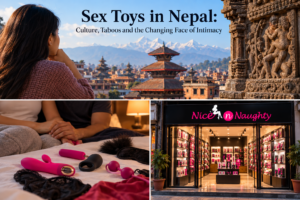
Sex Toys in Nepal: Moving Beyond Myths
Sex toys are often discussed through stereotypes. Some people assume that they are only for single adults, while others believe that couples who use them must be experiencing relationship problems.
These assumptions overlook the variety of personal experiences.
Some adults are curious about vibrators. Others may be interested in products designed for male pleasure or couples. Many people are not interested in sex toys at all.
Using an intimate product does not automatically mean that someone is dissatisfied with a partner. Equally, choosing not to use one does not mean someone is old-fashioned or uninformed.
The decision belongs to the individual or, where a product is used together, to both partners.
Accurate information is more useful than stereotypes. Before buying a product, customers should understand its intended use, material, cleaning requirements and any relevant safety instructions.
If a product causes pain or persistent irritation, stop using it. Ongoing or concerning symptoms should be discussed with a qualified healthcare professional.
Where to Find Sex Toys in Kathmandu, Nepal
For adults who want to move from researching intimate products to exploring available options, finding a store that provides clear information can be an important step.
Nice N Naughty – Sex Toys Store is located at Pipal Bot, New Road (Naya Sadak), Kathmandu, Nepal.
Adults interested in intimate products and sexual wellness can visit the Nice n Naughty website to explore the store and its available information. You can also find Nice N Naughty on Google Maps to view the business listing and get directions.
For people searching online for sex toys in Nepal or sex toys in Kathmandu, the decision should involve more than choosing a product based on a photograph or advertisement. It is worth checking product descriptions, intended use, materials, cleaning instructions and the seller’s customer service before making a purchase.
Nice N Naughty provides a local point of reference for adults exploring intimate products in Kathmandu. The wider goal is not to encourage everyone to buy sex toys, but to make reliable product information more accessible to adults who are interested in learning about them.
Personal privacy, informed decisions and respectful customer service all matter when choosing where to shop for products that people may consider particularly personal.
Can Nepal Have a More Open Conversation About Intimacy?
Being more open about sexual wellness does not require everyone to abandon their beliefs, traditions or personal boundaries.
It means recognising that adults may have questions and that those questions deserve accurate, respectful answers.
Parents, educators, healthcare professionals, businesses and media outlets can all contribute to a healthier conversation by avoiding unnecessary shame, correcting misinformation and respecting personal choices.
It is also important to recognise the limits of what we know. Without comprehensive nationwide data, we cannot confidently claim that sex toy use is rising at a particular rate or that all Nepali adults are becoming more accepting. Attitudes vary, and meaningful change may happen differently across communities.
Still, there is value in making reliable information easier to find.
When people can learn about intimacy without being mocked or misled, they are better placed to make decisions that reflect their own values, needs and circumstances.
Final Thoughts: Culture, Curiosity and the Future of Intimacy
The conversation about sex toys in Nepal reflects a wider question about how people balance tradition, privacy and modern life.
Nepal’s cultural heritage is complex, its communities are diverse, and its attitudes towards intimacy cannot be captured in a single stereotype. For some adults, sexual wellness remains a deeply private subject. Others are increasingly willing to seek information and discuss their questions in appropriate settings.
Both realities deserve to be understood without exaggeration or judgment.
For adults exploring intimate products, the most important principles are informed choice, personal comfort, consent and safety. A product is a personal option—not a measure of someone’s experience, relationship or character.
At Nice N Naughty – Sex Toys Store in Pipal Bot, New Road, Kathmandu, the conversation connects to a practical local question: how can adults find information about intimate products and make choices that suit them?
Ultimately, a more informed approach to sexual wellness does not have to mean rejecting Nepali culture. It can mean creating space for accurate information, personal privacy and respectful choices within the realities of modern Nepali life.
Sometimes, change begins not with a dramatic cultural shift, but with the simple freedom to ask a question without feeling ashamed.
Further Reading and Research
The following research provides background for the discussion of sexual health and communication in Nepal:
- Menger, L. M. et al. (2015). Unveiling the silence: women’s sexual health and experiences in Nepal. Culture, Health & Sexuality. Read the research abstract on PubMed.
- Kaufman, M. R. et al. (2012). Let’s talk about sex: development of a sexual health program for Nepali women. AIDS Education and Prevention. Read the research abstract on PubMed.
Note: These studies address sexual health and communication, not nationwide sex toy ownership. Cultural observations in this article should not be interpreted as claims about every Nepali person.